Call Us: +86-28-68731157Email: info@jrt-measure.com
enLanguage

Laser Sensor

What is Laser Sensor?


A laser sensor is a measurement value recorder working with laser technology and turning the physical measured value into an analogue electrical signal. This means that the laser sensor is conceived for contactless measurement. The laser sensor works based on the triangulation principle. With a laser sensor you can measure the length of a road, a distance’s length and positions, without any contact. This happens at a very high resolution. Laser sensors also dispose of various linearities, in addition to the various resolutions.

Advantages of Laser Sensor

High Accuracy And Precision

Laser sensors offer high accuracy and precision in measurement. Their advanced technology and focused laser beams ensure reliable and precise data acquisition. Laser sensors excel in precise positioning, distance measurement, and object detection applications.

Non-contact Measurement

One of the significant advantages of laser sensors is non-contact measurement. It measures without contact, unlike traditional methods.


Wide Operating Range

Laser sensors adapt to different measurement needs with a wide operating range. Accurate measurements at short and long distances offer flexibility.Versatility suits diverse industries and scenarios. Precise and reliable measurements enhance their value.

Fast Response Time

Laser sensors boast a fast response time, allowing for quick and real-time measurements. It is deliver quick feedback for swift decision-making. Real-time monitoring benefits from their fast response time.
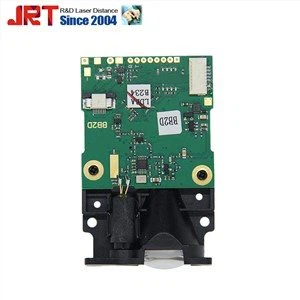
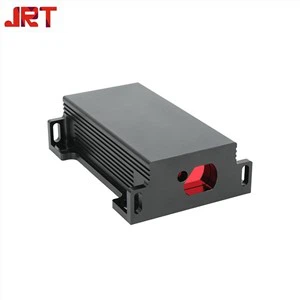
 

why choose us


High quality

Our products are manufactured or executed to very high standards, using the finest materials and manufacturing processes.


Rich experience

Dedicated to strict quality control and attentive customer service, our experienced staff is always available to discuss your requirements and ensure complete customer satisfaction.


Quality control

We have professional personnel to monitor the production process, inspect the products and ensure that the final product meets the required quality level standards, guidelines and specifications.


24h online service

We try and respond to all concerns within 24 hours and our teams are always at your disposal in case of any emergencies.


Types of Laser Sensor
 
01/

Laser Displacement Sensors
Displacement sensors are generally used to detect objects. Displacement sensors are not aimed to measure distance. In displacement sensors, the sensor would emit laser light. A passing object would reflect the beam when the object crosses the displacement sensors. This reflected beam would make the sensor judge the received reflection as a detection of the object.

02/

Laser Projector
Laser projectors are lasers that can project laser light on the desired surface. The projected light can determine margins, dimensions, or position in an application. Laser projectors are used in industries like textile or electronics. Laser projectors are also used for presentations in offices, classrooms, hotels, museums, showrooms, and attractions to simulation applications.

03/

Laser Photoelectric Sensors
Laser photoelectric sensors are used where the processes are carried out at high speed. For example, counting/detecting the product. Because of their capacity to detect objects at high speeds, they are also known as trigger sensors.

04/

Laser Edge Detection Sensors
Laser edge detection sensors are used where inline detection and counting one side of the product are needed. The laser edge detection sensors are mounted in the production line. The laser edge detection sensors are used where thin sheets/plates must be detected on the basis of thickness so as to limit accumulations and production errors.

05/

Laser Light Curtains
These types of laser sensors consist of a transmitter and a receiver. There is a barrier of parallel laser beams emitted between the transmitter and receiver. Objects passing through the barrier are detected and also measured.

06/

Laser Positioning Sensor
These lasers are used for the positioning of the products. The positioning laser transmits a projection and it does not receive the reflection.

Features of Laser Sensors
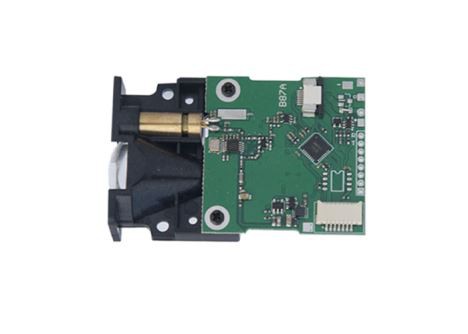
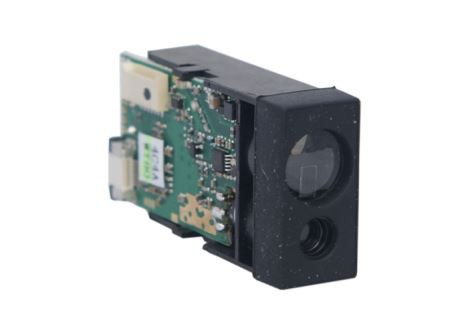
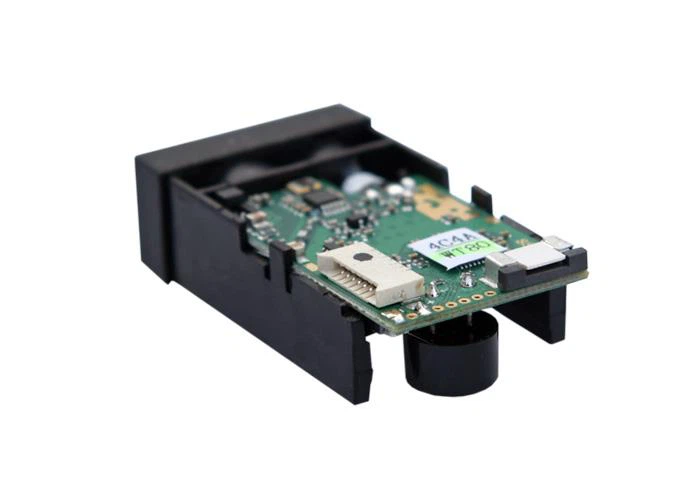
激光距离传感器
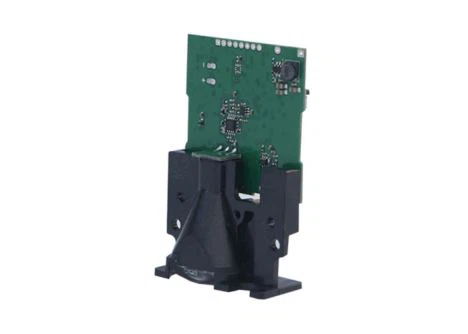
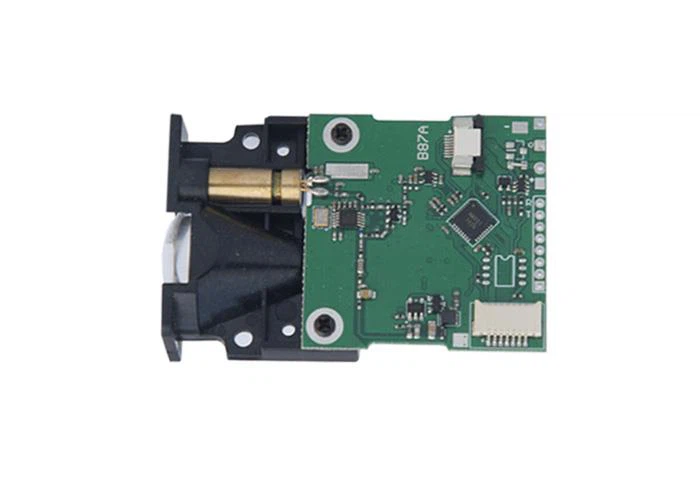
激光距离传感器1mm
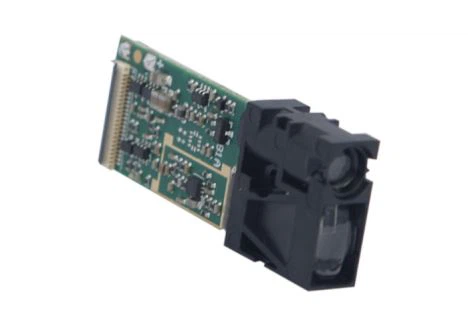
激光测量传感器
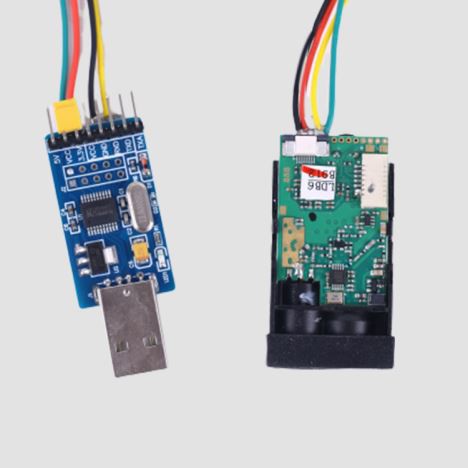
激光距离传感器1mm

High Precision And Accuracy
Laser sensors are renowned for their high precision and accuracy in measurement. Advanced technology and focused laser beams enable precise and reliable positioning and measurement.
These are invaluable in precise measurement industries like manufacturing, robotics, and quality control. Accurate laser sensor results enhance efficiency and product quality across applications.


Non-contact Measurement
A key advantage of laser sensors is non-contact measurement capability. Laser sensors measure without contact, unlike traditional methods requiring physical contact.
Non-contact measurement laser sensor minimizes object damage and sensor wear, preserving delicate items. Laser sensors’ non-contact measurement is versatile and suitable for challenging environments.


Wide Range Of Operating Distances
Laser sensors measure objects at different distances with a wide operating range. It offers high-accuracy measurements for both short and long distances.
Laser sensors are versatile, serving diverse industries with close proximity and long-distance applications. It is wide operating range ensures versatility for diverse measurement needs.


Fast Response Time
Laser sensors provide quick and real-time measurements with fast response time. It offers fast data acquisition and processing for immediate feedback and decision-making.
Real-time monitoring applications benefit from laser sensors’ fast feedback and control. Laser sensors’ fast response time enhances efficiency and productivity in multiple industries.


Ability To Measure Various Materials And Surfaces
Laser sensors accurately measure diverse materials and surfaces. It can measure various materials like metals, plastics, glass, and fabrics. Moreover, laser sensors can accurately measure surfaces with varying textures, reflectivity, and colors.
Laser sensors’ versatility finds applications in manufacturing, construction, and agriculture. It is measuring diverse materials and surfaces.

Laser Sensor Working Principle

Emission Of Laser Beam
Laser sensors work by emitting a laser beam as a fundamental principle. The sensor emits a highly focused and coherent laser beam towards the target object.
The laser beam acts as a precise and focused light source during interaction with the target. The emission stage is crucial for laser sensors’ measurement process.


Interaction With The Target
After the laser beam is emitted, it interacts with the target object. The laser beam reacts based on target material and surface properties. This interaction alters the properties of the laser beam, such as its intensity, phase.
Analyzing the interaction provides valuable measurements like distance, position. The interaction stage is crucial for the subsequent analysis and measurement process.


Detection And Analysis Of Reflected Light
The laser sensor detects and analyzes the reflected light after interaction. The sensor measures characteristics of the reflected light beam, such as intensity.
The measurements provide data to calculate distance, position, and other parameters. It is extract information from reflected light for precise measurements.


Calculation Of Distance Or Position
After analyzing the reflected light, the laser sensor calculates the target object’s distance. Calculation involves using laser beam properties and reflected light characteristics.
By comparing emitted and reflected light, the sensor calculates accurate distance or position. Laser sensors deliver precise measurements across various applications using sophisticated algorithms.

Functions of Laser Sensors
 

Distance Measurement
One of the primary functions of laser sensors is distance measurement. High precision and non-contact measurements accurately determine target distance.
Reliable distance data is essential in robotics, automation, surveying, and construction. Accurate distance measurements benefit industries in positioning and monitoring objects.


Position And Displacement Sensing
Laser sensors excel at position and displacement sensing tasks. Accurate object measurements provide valuable feedback in automation, robotics, and precision engineering.
Precise control of object movements and positioning is enabled in diverse industries. High accuracy and fast response enable precise positioning and real-time adjustments.


Level And Proximity Detection
Laser sensors are commonly used for level and proximity detection applications. They detect object presence, absence, or level without physical contact. In level detection, laser sensors can monitor and measure the height or depth of liquids.
For proximity detection, objects are detected within a specific range. These functions support efficient control and monitoring in manufacturing and packaging industries.


Object Detection And Recognition
Laser sensors are widely utilized for object detection and recognition purposes. Object detection and differentiation contribute to automation and robotics systems.
They aid in identifying and categorizing objects based on their shape, size. Accurate object detection enhances efficiency and safety in automation, security, and autonomous vehicles.

Application of Laser Sensors


Industrial Automation
Laser sensors find extensive applications in industrial automation. They enable precise positioning, object detection, and quality control in manufacturing processes.Robotic guidance and material handling improve efficiency and accuracy in production lines. Precision, non-contact measurement, and fast response enhance industrial automation productivity and reliability.


Robotics And Manufacturing
Laser sensors play a crucial role in robotics and manufacturing industries. Laser sensors aid robot navigation, obstacle detection, and precise positioning.They provide real-time feedback and enable robots to interact with their environment effectively. In manufacturing, laser sensors aid in quality control, dimensional inspection, and alignment tasks.Accurate measurements, defect detection, and product verification enhance quality and efficiency. In enhancing automation and robotics in manufacturing, laser sensors are essential.


Automotive Industry
The automotive industry extensively utilizes laser sensors for various applications. Collision avoidance systems utilize object detection for driver proximity warnings. They enhance adas capabilities with adaptive cruise control and lane departure warning.In autonomous vehicles, lidar sensors map surroundings and provide real-time navigation data. Laser sensors enhance automotive safety and enable autonomous capabilities.


Aerospace And Aviation
Laser sensors have significant applications in the aerospace and aviation industry. Laser tech boosts aircraft and spacecraft safety, and efficiency through navigation and detection.They enable precise position and distance measurements during landing approaches and docking procedures. Laser sensors ensure aerospace safety and reliability through accurate data acquisition.


Healthcare And Biomedical
Laser sensors have valuable applications in the field of healthcare and biomedical. Medical imaging systems utilize lasers to capture detailed tissue images for diagnostics. It detects subtle movements, aiding in monitoring vital signs.Laser sensors provide precise measurements and feedback during surgical procedures. It enhances patient care, diagnostics, and biomedical research through advancements.


Security And Surveillance
Laser sensors play a significant role in security and surveillance systems. Laser technology safeguards perimeters, detects access, and enables precise virtual detection zones. They contribute to the identification and tracking of intruders or suspicious activities. It boosts security systems with reliable real-time detection indoors and outdoors.

Components of Laser Sensor

Laser Diode
The laser diode is the key component that emits the laser beam used for sensing. It is a semiconductor device that converts electrical energy into light energy. The laser diode generates a coherent and focused beam of light with specific properties such as wavelength, power, and divergence.


Optics
Optics play a crucial role in laser sensors by shaping and directing the laser beam. The optics include lenses, mirrors, beam expanders, and filters. They control the beam size, focus, divergence, and other characteristics to suit the specific sensing requirements.


Photodetector
A photodetector is used to detect the laser light that is reflected, transmitted, or scattered by the target object. The photodetector converts the optical signal into an electrical signal for further processing. Common types of photodetectors used in laser sensors include photodiodes and phototransistors.


Signal Processing Circuitry
Laser sensors incorporate signal processing circuitry to analyze the electrical signal from the photodetector. This circuitry may include amplifiers, filters, analog-to-digital converters (adcs), and digital signal processing (dsp) components. The signal processing circuitry helps extract relevant information from the detected laser signals, such as distance, position, or presence of objects.

Control electronics

Laser sensors often include control electronics that manage the operation of the sensor. These electronics may control parameters such as laser power, modulation, scanning patterns (in scanning laser sensors), and trigger mechanisms. The control electronics ensure proper synchronization and coordination between laser emission, signal detection, and data processing.

Housing and interface

Laser sensors are enclosed in a housing or package that provides mechanical protection, stability, and sometimes environmental sealing. The housing may also include features like mounting brackets, alignment guides, and connection interfaces. The interface allows the laser sensor to communicate with other devices or systems, such as controllers or computers.

Power supply

Laser sensors require a power source to operate, typically in the form of electrical power. The power supply can be internal or external, depending on the sensor design and application requirements.These are the primary components commonly found in laser sensors. The specific design and configuration of a laser sensor can vary depending on the intended application, performance specifications, and the desired sensing capabilities.

 
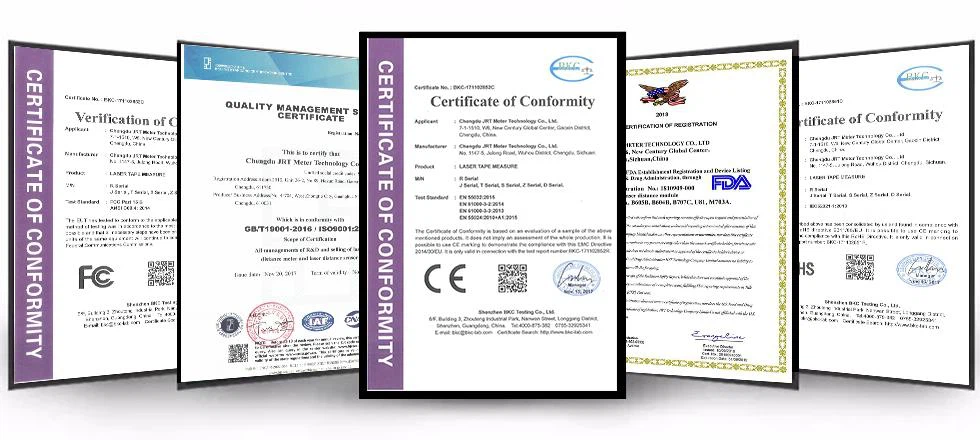
Certifications


productcate-1-1

 
Our Factory


We start as a technical services company, now we are the biggest laser distance sensor manufacture in china. In 2018, our u81, smallest phase-shift laser distance sensor is on market. In 2019, we started to produce lidar sensor. We are always r&d new and better laser sensors for all customers.

productcate-1-1

 
FAQ
 

Q: What is the use of laser sensor?

A: Laser sensors can be ideal for collision avoidance, level measurement for liquids and solids, conveyor belt profiling, proximity detection, positioning and equipment monitoring, or even altimetry applications.

Q: What is the difference between a laser sensor and a light sensor?

A: The light source of the photoelectric sensor is visible red light and infrared light, but the laser sensor uses laser technology to measure the sensor. The difference here is that the spot of red light and infrared light is large, which will increase with the distance, which is not conducive to detecting small objects.

Q: How does a laser level sensor work?

A: A laser transmitter at the top of a vessel fires a short pulse of light down to the process liquid surface, which reflects it back to the detector. A timing circuit measures the elapsed time (tof) and calculates the distance.

Q: How does laser detection work?

A: If we aim the laser beam at a shiny object, it will be reflected back from it - instantaneously. The reflected beam is captured by optics and a light-sensitive element - a photodiode - converts it into an electrical signal. Based on the length of the pulse return time, the lidar calculates the distance to the object.

Q: What are the advantages of laser sensors?

A: Laser sensor technology gives several benefits over usual mechanical devices which are used for measurement, that includes measurement of the non-contact, tiny measurement area, data collection with high-speed, flexible operation, and solid-state design.

Q: Are laser sensors digital or analog?

A: Displacement sensors, both analog and digital, rely on laser beams and triangulation to determine distance. To overcome the limitations of contact sensors, the first laser-based displacement sensors were commercially introduced in the early 1970s, implementing laser triangulation principles.

Q: Is laser sensor better than optical?

A: Optical mice work well on most surfaces, including mouse pads, desks, and cloth. Laser mice offer better compatibility with challenging surfaces like glass, glossy desks, or unconventional textures. However, it's always best to test the mouse on different surfaces to ensure the best tracking performance.

Q: What is the range of a laser sensor?

A: Laser distance sensors are designed for non-contact distance measurements: Laser gauges for measuring ranges up to 10m, laser distance sensors for up to 270m. These sensors are used for positioning and type classification in machine building and handling equipment.

Q: What are the characteristics of a laser sensor?

A: Laser sensors provide information on the composition, pressure, temperature, and velocity of gases. These non-intrusive sensors leverage a range of leading-edge laser technologies to measure gas properties without disturbing the gas.

Q: How do laser sensors measure distance?

A: The diode in the sensor emits laser pulses that are reflected by the object. The time interval from the emission of the light pulse to the object and back again is measured. The time t and the light speed c then provide the corresponding distance to the object.

Q: What are the components of a laser sensor?

A: Laser sensors incorporate signal processing circuitry to analyze the electrical signal from the photodetector. This circuitry may include amplifiers, filters, analog-to-digital converters (adcs), and digital signal processing (dsp) components.

Q: Can lasers detect distance?

A: In a nutshell, laser measurement tools are based on the principle of reflection of a laser beam. To measure a distance, the device emits a pulse of laser in the direction of an object, for example a wall. The time necessary for the laser beam to get to the object and go back determines the measurement of the distance.

Q: Is a laser sensor an optical sensor?

A: Laser sensors are a special kind of optical sensor. A laser is a very narrow beam of light of a single color with the same frequency that travels in the same direction. The word laser stands for light amplification by stimulated emission of radiation.

Q: Is a laser sensor a proximity sensor?

A: Laser photoelectric proximity sensors with background suppression measure distances by calculating angles. This is called triangulation. The emitted light is reflected by an object and hits the receiver element at a certain angle depending on the distance.

Q: What is the working principle of a sensor?

A: Sensors work by detecting physical changes in the device's environment and output them as analogue voltages or digital signals. This is then sent to a human-readable display where it can be monitored or transmitted, or relayed to other electronic devices for further processing.

Q: What is the difference between lidar and laser sensor?

A: A lidar employs penetrating laser pulses to make it easier to measure the organization and structure of the atmosphere while a laser is a technology that produces a monochromatic, perceptible beam of light. This is a significant distinction between the two.

Q: What is the difference between ultrasonic sensor and laser sensor?

A: Ultrasonic sensors reach up to 8,000 mm (or 8 meters) and thus can be used within most small and medium distances. The laser sensors start at a maximum measuring range of 10 cm and are available up to even a 3,000 meters (or 3 km). Distance lasers can be used for small, medium and (very) large distances.

Q: How accurate is a laser distance sensor?

A: As far as accuracy, laser distance measuring tools work as well at short distances as long distances with some being to within 1/16 of an inch at 400 ft.

Q: How do you detect laser light?

A: Light dependent resistors can be used to detect laser light in a dark environment. However, in ambient light, photodiode and phototransistors are recommended.

Q: How far can a laser measure distance?

A: Even with laser aiming, you can't always be sure that the surface from which the sound reflection is detected is the same as that where the laser dot is showing. This can lead to gross errors. Range is limited to about 15m, whereas some laser devices can measure up to 200m.

As one of the most professional laser sensor manufacturers and suppliers in China, we're featured by customized products with low price. If you're going to wholesale bulk cheap laser sensor, welcome to get quotation from our factory. Also, OEM service is available.

(0/10)

clearall