Call Us: +86-28-68731157Email: info@jrt-measure.com
enLanguage

TOF Sensor

What is TOF Sensor?


Time of flight sensors measure the time it takes something to travel a distance through a medium. Typically, this is the measurement of the time elapsed between the emission of a wave pulse, its reflection off of an object, and its return to the tof sensor. A time of flight camera is a device that utilizes tof measurement to determine distances between the camera and objects or environments, creating images generated by individually-measured points.

Advantages of TOF Sensor

Long Range

Since tof sensors work with lasers, they can measure long ranges and distances with extreme precision.For this reason, tof sensors can detect far and near objects of different shapes and sizes–making them flexible.

Cost-effective

Regarding prices, tof sensors are more budget-friendly than other 3d depth scanning technology.However, its lower price does not affect its capturing of 3d information fast.

Precise And Fast Measurements

Time of flight sensors leaves other distance sensors, like ultrasonic sensors, in the dust regarding speed and precision.Tof sensors can quickly detect objects and resist air pressure, temperature, and humidity, making them perfect for indoor and outdoor use.

Safe

You don't have to worry about lasers harming your eyes.Most sensors feature low-power infrared laser lights and use modulated pulses to drive them.Plus, these sensors reach the class 1 laser safety standard–making them safe for the human eye.

First 123 Last 1/3

why choose us


High quality

Our products are manufactured or executed to very high standards, using the finest materials and manufacturing processes.


Rich experience

Dedicated to strict quality control and attentive customer service, our experienced staff is always available to discuss your requirements and ensure complete customer satisfaction.


Quality control

We have professional personnel to monitor the production process, inspect the products and ensure that the final product meets the required quality level standards, guidelines and specifications.


24h online service

We try and respond to all concerns within 24 hours and our teams are always at your disposal in case of any emergencies.

 
Types of TOF Sensor

There are two main types of tof sensors: Optical and electromagnetic. Optical tof sensors use light as the source for measuring distance, while electromagnetic tof sensors use electromagnetic waves. Both types of sensors operate on the same basic principle, but the method of measuring distance differs between the two.


Optical tof sensors use a light pulse, typically in the infrared (ir) range, as the source for distance measurement. The light pulse is emitted from the sensor and reflects off the object, returning to the sensor where it is detected. The time it takes for the light pulse to travel to the object and back is measured, and the distance between the sensor and the object is calculated using the speed of light.


Electromagnetic tof sensors use electromagnetic waves, such as radar or lidar, as the source for distance measurement. Like optical tof sensors, the electromagnetic wave is emitted from the sensor and reflects off the object, returning to the sensor where it is detected. The elapsed time between the emission and detection of the electromagnetic wave is measured, and the distance between the sensor and the object is calculated based on the speed of the electromagnetic wave.

Application of TOF Sensor

Robotics
Tof sensors are commonly used for obstacle detection and navigation. For example, the roomba vacuum cleaner uses tof sensors to detect and avoid colliding with furniture and other objects in a room.


Automotive
In the automotive industry, tof sensors are used in driver-assist systems such as adaptive cruise control and collision avoidance systems. As new hybrid and electric vehicle variants roll off the production line these systems are becoming increasingly common and can detect the distance between the vehicle and other objects, allowing the vehicle to adjust its speed and avoid collisions.


Medical
Typically used in medical applications for non-invasive imaging and diagnostics. For example, tof technology is used in optical coherence tomography (oct) which is a medical imaging technique used to produce high-resolution images of tissues in the body.


Industrial
Tof sensors are used in industrial automation for applications such as material handling, positioning, and quality control. In a manufacturing facility, for example, tof sensors can be used to determine the position of objects on a conveyor belt, allowing for more precise material handling and quality control. They are also used in automated guided vehicles to avoid potential collisions as materials and finished goods are moved around the factory floor.

Consumer electronics

Such sensors are regularly used in smartphones, tablets, and laptops. Smartphones, for example, use tof sensors for facial recognition and biometric authentication, while tablets and laptops use tof sensors for gesture recognition.

Retail

Tof sensors enable retailers to track customer movements, buying patterns and monitor inventory levels, allowing for more efficient and effective operations. By understanding how customers move around stores, retailers gather valuable data which they can then use to ensure ‘high value’ items are promoted effectively whilst providing the user with a more personalised shopping experience. They can also ensure waste is minimised, particularly where perishable goods are concerned, by monitoring shelf life details and restocking based on real time data.

Surveying

In the field of surveying, tof sensors are used for applications such as topographic mapping and land measurement. For example, a surveyor can use a tof sensor to measure the distance between the sensor and the top of a building or tree, allowing for accurate mapping and land measurement.

How to Choose TOF Sensor
无人机 TOF 距离模块 运动传感器 100hz
100Hz TOF距离传感器激光模块 50m
智能激光测量仪高性能TOF测距模块
迷你激光雷达(TOF) 激光测距传感器 100Hz 30m

Consider The Measurement Range
One of the most important factors to consider when choosing a tof sensor is the measurement range. Tof sensors typically have a range of a few centimeters to several meters. If you need to measure objects that are far away, you will need a sensor with a long measurement range. Conversely, if you only need to measure objects that are close by, a sensor with a short measurement range will suffice. Make sure to choose a sensor that has a measurement range that is appropriate for your application.


Look At The Sensor Resolution
Another important factor to consider is the sensor resolution. Sensor resolution refers to the smallest distance that the sensor can measure accurately. If you need high accuracy measurements, you will need a sensor with a high resolution. However, keep in mind that sensors with higher resolutions are usually more expensive.


Determine The Required Measurement Speed
The measurement speed is another important consideration when choosing a tof sensor. If you need to measure objects quickly, you will need a sensor with a high measurement speed. However, keep in mind that sensors with higher measurement speeds are usually more expensive. If you don't need to measure objects quickly, you can save money by choosing a sensor with a slower measurement speed.


Consider The Environmental Conditions
Tof sensors can be affected by environmental conditions such as temperature, humidity, and ambient light. If you will be using the sensor in harsh environmental conditions, you will need a sensor that is designed to withstand those conditions. Make sure to choose a sensor that is rated for the environmental conditions in which it will be used.


Look At The Sensor Interface
Tof sensors typically have a digital interface such as i2c or spi. Make sure that the sensor you choose has an interface that is compatible with your microcontroller or processor.


Check The Sensor's Power Consumption
Finally, consider the power consumption of the sensor. If you are designing a battery-powered device, you will need a sensor with low power consumption to maximize battery life. Make sure to choose a sensor that has a power consumption that is appropriate for your application.

How Does a TOF Sensor Work
 

Using timed pulses

For example, it works by firstly illuminating the target with laser light and measuring the reflected light with a scanner where the distance of the object is deduced using the speed of light to calculate the distance traveled accurately. In addition, the differences in laser return times and wavelengths are then used to make precise digital 3d representations and surface characteristics of the target and visually map out its individual features.


As you can see, a timer will start during the exit of the light and when the return light is received by the receiver, the time is returned by the timer. When the two times are subtracted, the “time of flight” of the light is obtained, and the speed of light is constant, so the distance can be easily calculated using the formula above.

Using phase shift of an amplitude modulated wave

Next, tof can also use continuous waves to detect the phase shift of the reflected light to determine depth and distance.Where c is the speed of light (c=3×10⁸ m/s), λ is one wavelength (λ=15 m), and ƒ is the frequency, each point on the scene can be easily calculated by the sensor to find out the depth.


And all these are happening very fast as we are working with the speed of light. Can you imagine how precise and fast the sensor is able to measure? Let me give you an example, as light travels 300,000km per second, if an object is 5m away from you, the time difference between the light leaving the camera and returning is roughly 33 nanoseconds which are equal to only 0.000000033 seconds!

Where are ToF Sensors Used


Tof sensors were used in many smartphones as a "depth" camera to aid the device's main camera in producing higher quality portrait mode photos. These photos aim to create a shallow depth of field to replicate a camera lens. Since knowing the depth of different objects in such photos is critical to getting the blurriness of the background right, tof cameras and sensors can make quite the difference.


In addition, tof cameras are also used in biometric authentication, where a device with a tof camera can create a 3d map of a face to use as a reference for unlocking the device. This is essentially how face unlocking technology works, including apple's face id. It's also more secure than just comparing two images to determine a match, as there is more data to work with compared to traditional computer vision algorithms that operate on 2d data.


They're commonly used in electric cars and other navigation systems thanks to their object detection capabilities and high polling rate, which can be nearly 160hz on some sensors. This makes them perfect for real-time applications such as object detection, navigation, and even blurring the background on your zoom calls.


This ability to differentiate between the subject and the background is also often applied to 3d printing. Tof cameras can easily replicate a real-life object in all three dimensions, saving you the hassle of designing it from scratch, especially if it's a complex structure.


Tof sensors also help in 3d imaging and improving ar experiences in addition to object scanning, gesture navigation, and indoor navigation.


You can find tof sensors on microsoft's xbox kinect and other gesture recognition projects, drones, and ar headsets. Overall, their versatility means that their use cases range from anywhere between a smartphone camera suite to an autonomous car's navigation system.

Components of TOF Sensor


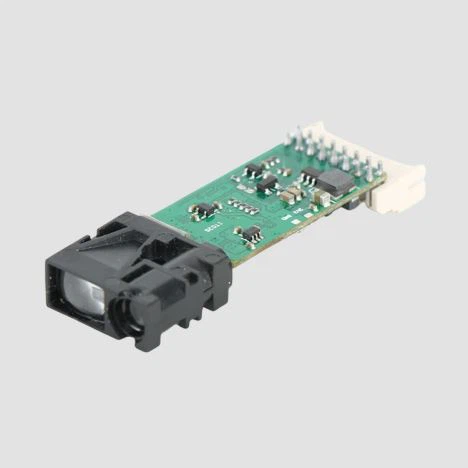
Of sensor uses infrared light. After the light is reflected from the object back to the sensor, the distance between the sensor and the measuring object can be calculated according to the time difference between the emission and reflection of the light. Tof sensor is also called "depth camera" or tof camera.


Tof Sensor Is Composed Of Two Parts: The first part is a diode that emits infrared light, and the second part is a special photosensitive matrix. The sensor can measure the time reflected from the object to the order of nanoseconds. In addition, the tof sensor has an important feature that makes it a 3d sensor. That's because the tof sensor can not only accurately calculate the distance between a single object and the sensor, use the difference in laser return time and wavelength, but also perform accurate digital three-dimensional (3d) characterization of the target, and intuitively draw the various features of the target.

 
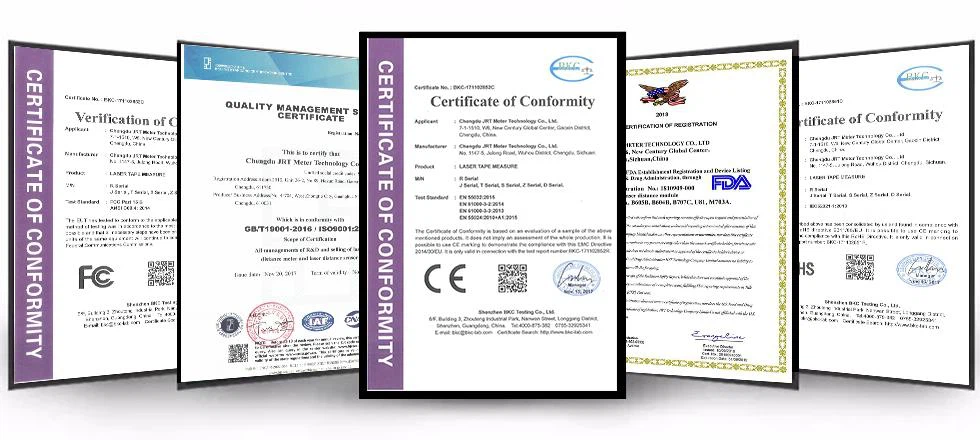
Certifications


productcate-1-1

 
Our Factory


We start as a technical services company, now we are the biggest laser distance sensor manufacture in china. In 2018, our u81, smallest phase-shift laser distance sensor is on market. In 2019, we started to produce lidar sensor. We are always r&d new and better laser sensors for all customers.

productcate-1-1

 
FAQ
 

Q: Is lidar and tof the same?

A: As with radar, lidar is rather a complementary technology to indirect tof. Compared to tof, high-resolution (scanning) lidars offer a longer range but come at a (much) higher price.

Q: What does a tof do?

A: Time-of-flight (tof) sensors are used for a range of applications, including robot navigation, vehicle monitoring, people counting, and object detection. Tof distance sensors use the time that it takes for photons to travel between two points to calculate the distance between the points.

Q: What is tof used for?

A: Time-of-flight mass spectrometry (tof-ms) analysis is a mass spectrometry method used for the determination of substance composition or structure based on the principle that ions with the same kinetic energy and different mass-charge ratios move at different velocities in a constant electric field.

Q: What is an example of a tof sensor?

A: A time of flight sensor can use all the information gained using tof principles for applications such as robot movement, human-machine interfaces, – like the second-generation kinect sensor for the xbox one – smartphone cameras, machine vision, and even earth topography.

Q: How do tof sensors work?

A: Time-of-flight (tof) sensors are used for a range of applications, including robot navigation, vehicle monitoring, people counting and object detection. Tof distance sensors use the time that it takes for photons to travel between two points to calculate the distance between the points.

Q: What are the advantages of a tof sensor?

A: Some advantages of tof sensors are: Fast and accurate: They provide real-time distance measurements with high accuracy. Low light performance: Tof sensors work well in low-light conditions. Non-contact: They don't require physical contact with objects, making them suitable for various applications.

Q: What are the different types of tof sensors?

A: There are two main types of tof. Direct tof (dtof) involves a simple, direct measurement of the time until reflection is detected. Indirect tof (itof) measures distance by collecting reflected light and discerning the phase shift between emitted and reflected light.

Q: What is tof imaging?

A: Time-of-flight (tof) magnetic resonance angiography (mra) is a non-invasive, non-contrast-enhanced mra technique that provides contrast between vessels and stationary tissues by inducing blood inflow effects (1,2,3,4).

Q: What is lidar and tof?

A: Lidar and tof (time of flight) sensors are both types of sensors that can be used for depth sensing and distance measurement, but there are some differences between them. Lidar (light detection and ranging) sensors use laser light to measure distance and create a 3d map of the surrounding environment.

Q: What is the difference between tof and non tof?

A: Tof images used an iterative reconstruction method (ge, osem), 2 iterations, 16 subsets, and gaussian post-reconstruction filtering with a 6.4 mm filter width. The non-tof images used this iterative reconstruction method with 2 iterations and 24 subsets, with the same gaussian post-reconstruction filtering.

Q: What is the wavelength of a tof sensor?

A: It uses a sensor that is sensitive to a laser's wavelength (typically 850nm or 940nm) to capture the reflected light. The sensor measures the time delay ∆t from when the light is emitted and when the reflected light is received by the camera or sensor.

Q: What is the difference between structured light and tof?

A: Structured light: Medium-short range depth sensing like facial recognition, 3d scanning, augmented reality. Tof: Depth sensing at various ranges, especially in scenarios needing fast response like robot navigation, gesture recognition, real-time 3d modeling.

Q: What are the different types of tof sensors?

A: There are two main types of tof sensors: Optical and electromagnetic. Optical tof sensors use light as the source for measuring distance, while electromagnetic tof sensors use electromagnetic waves. Both types of sensors operate on the same basic principle, but the method of measuring distance differs between the two.

Q: How do tof sensors work?

A: Time-of-flight (tof) sensors are used for a range of applications, including robot navigation, vehicle monitoring, people counting and object detection. Tof distance sensors use the time that it takes for photons to travel between two points to calculate the distance between the points.

Q: What is the frequency of a tof sensor?

A: The 3d tof sensor is an addressable cmos pixel array based on the depthsense™ technology [2][3], which supports high pixel modulation frequency (>50mhz), and up to 5x increase in signal-to-noise ratio (snr).

Q: Is tof and lidar the same?

A: As with radar, lidar is rather a complementary technology to indirect tof. Compared to tof, high-resolution (scanning) lidars offer a longer range but come at a (much) higher price.

Q: What is the difference between direct tof and indirect tof?

A: Two ways to measure the time of flight (tof): • in the direct method, the time difference between the emitted pulse, and a received signal. In indirect, a continuous modulated sinusoidal light wave is emitted and the phase difference between outgoing and incoming signals is measured.

Q: What are the three main parameters you need to consider when selecting a sensor?

A: When choosing a sensor for a project, you should consider the following factors: Sensitivity: How accurately the sensor can detect changes in the quantity being measured. Range: The minimum and maximum values that the sensor can measure. Accuracy: The degree of closeness of the sensor's measurement to the true value.

Q: What is the difference between ultrasonic and tof sensors?

A: For range-finding and distance sensing, time-of-flight (tof) is very powerful when emitting light rather than sound. Compared to ultrasound, it provides far greater range, faster readings, and greater accuracy whilst still maintaining small size, low weight and low power consumption characteristics.

Q: How accurate are tof sensors?

A: The accuracy of tof cameras is also superior to any other depth sensing technology except for structured light cameras. They can provide accuracy to a range of 1mm to 1 cm, depending on the operating range of the camera.

As one of the most professional TOF sensor manufacturers and suppliers in China, we're featured by customized products with low price. If you're going to wholesale bulk cheap TOF sensor, welcome to get quotation from our factory. Also, OEM service is available.

(0/10)

clearall