Call Us: +86-28-68731157Email: info@jrt-measure.com
enLanguage

Distance Meter

What is Distance Meter?


The distance meter enables various types of measuring work. The distance meter works well in all types of work in which distance measurements are needed, i.E. In construction, assembly, finishing, design, surveying, etc. Distance measurement is only the basic function of a rangefinder,it has many more possibilities.

Advantages of Distance Meter

Unmatched Accuracy

Our distance meter provide precise measurements down to the finest details. With state-of-the-art laser technology, you can trust in the reliability of our measurements, eliminating errors and ensuring project success.

Time-saving Efficiency

Time is of the essence in any project, and our distance meters are built to optimize your productivity. With their rapid measurement capabilities, you can obtain accurate readings in seconds, eliminating tedious manual measurements and saving valuable time.

Versatile Functionality

Our distance meters offer versatile functionality to accommodate various measurement requirements. Whether you need to measure distances, calculate areas and volumes, or utilize advanced functions like pythagorean theorem calculations, our devices have you covered.

Durability And Portability

Our distance meters are built to withstand the rigors of demanding work environments. They are designed with robust materials to ensure longevity, and their compact size allows for easy portability, making them ideal for professionals on the go.


First 12345 Last 1/5

why choose us


High quality

Our products are manufactured or executed to very high standards, using the finest materials and manufacturing processes.


Rich experience

Dedicated to strict quality control and attentive customer service, our experienced staff is always available to discuss your requirements and ensure complete customer satisfaction.


Quality control

We have professional personnel to monitor the production process, inspect the products and ensure that the final product meets the required quality level standards, guidelines and specifications.


24h online service

We try and respond to all concerns within 24 hours and our teams are always at your disposal in case of any emergencies.

 
Types Of Distance Meter


01

Laser Distance Meters

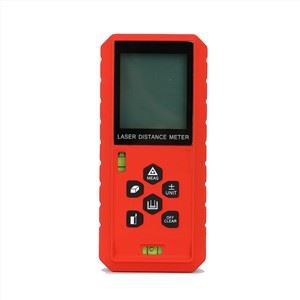
Use a laser to measure the time it takes for the beam to return after hitting a target, calculating distance with high precision.

02

Infrared Distance Meters

Measure distances using infrared rays, which can be less accurate than laser meters but are adequate for short-range applications.

03

Ultrasonic Distance Meters

Emit ultrasonic waves and measure the time taken for the echo to return, generally less accurate and more susceptible to interference.

长距离蓝牙激光测距仪OEM
Types of Measuring Tools

There are many types of tools that can be used to measure a distance. Distance meters are known for their high accuracy rate in recording measurement results. These tools are commonly used to determine dimensions, square footage, or the volume of a space, which makes them particularly useful for industrial applications relating to construction applications such as carpentry, masonry, and by locksmiths. In addition to construction fields, distance meters are also commonly used for position testing, coil weight testing, and more.


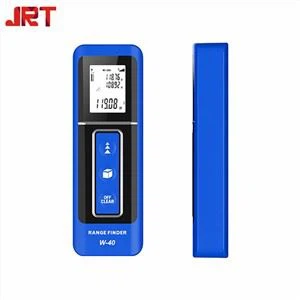
Laser and ultrasonic distance meters use an invisible laser beam that is aimed at an object. The laser light bounces off the surface, allowing the range finder to see the reflection and time how long the light takes to return.Range finders measure distances between an observer and an object to determine physical distance or the focusing length of a camera.


Measuring wheels allow for measurement while a user is walking. Wheels may be mechanical or electronic, and are available in all measurement units and standards.


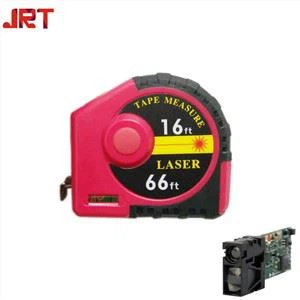
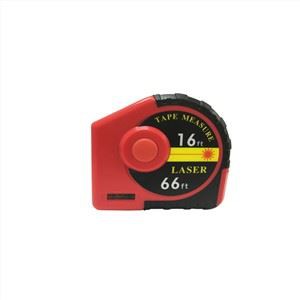
Measuring tapes are one of the most widely known and used types of measuring tools. Most types have a steel blade that extends to a certain length, which varies. This type of measuring tool is useful for those who take short measurements on a consistent basis. Newer measuring tapes may include conversion data on the backside, flashlights, led readouts, and calculators.

Working Principle of Distance Meter


Distance meters leverage cutting-edge technology to accurately measure distances. One of the most common types of distance meters is the laser distance meter, which uses laser beams to calculate the distance between two points. The device emits a laser beam that reflects off the target object and returns to the meter. By measuring the time it takes for the laser beam to travel and return, the distance meter can calculate the distance with remarkable precision.


Another type of distance meter is the ultrasonic distance meter. This device emits ultrasonic waves that bounce off objects and return to the meter. By calculating the time it takes for the waves to travel and return, the distance meter can determine the distance. Ultrasonic distance meters are often used in scenarios where laser beams may not be suitable, such as outdoor environments with poor visibility.


Lastly, optical distance meters use a combination of optics and image processing to measure distances. These devices capture images of the target object and use algorithms to calculate the distance based on known dimensions or reference points. Optical distance meters are commonly used in applications where laser beams or ultrasonic waves may not be feasible.


No matter the type of distance meter, these devices provide accurate measurements and greatly simplify the process of determining distances.

Application of Distance Meter
 

Applications of distance meters in construction and architecture

Distance meters have become indispensable tools in the construction and architecture industries. They provide accurate measurements for a variety of applications, ensuring precision and efficiency in projects.

One of the primary uses of distance meters in construction is measuring land plots and determining property boundaries. With a distance meter, surveyors can accurately measure distances between landmarks or boundary markers, ensuring that construction projects are within legal boundaries. This eliminates the need for manual measurements using tape measures or other outdated methods, saving both time and effort.


Distance meters also play a crucial role in construction layout. From determining the exact positions of foundation walls to setting up precise measurements for structural elements, distance meters enable construction professionals to achieve accurate layouts, resulting in precise and well-built structures.


Architects also rely on distance meters for various tasks, such as measuring building heights, determining room dimensions, and verifying structural elements. These devices provide architects with the necessary data to create accurate architectural plans and designs, ensuring that buildings are constructed according to specifications.

Uses of distance meters in interior design and real estate

Distance meters have found their way into the world of interior design and real estate, providing professionals with the tools they need to create functional and aesthetically pleasing spaces.


In interior design, distance meters are used to measure room dimensions, ensuring that furniture and decor fit perfectly within a given space. Designers can easily calculate distances between walls, windows, and other architectural features, allowing them to create accurate floor plans and design layouts.


Real estate professionals also benefit from distance meters when determining property dimensions and conducting accurate property assessments. By measuring distances between key features of a property, such as the size of the backyard or the length of a driveway, real estate agents can provide potential buyers with precise and reliable information. This helps buyers make informed decisions and ensures transparency in the real estate market.

Key Features of Distance Meters
1

High Precision
Distance meters are renowned for their exceptional precision, capable of providing measurements with an accuracy that can reach fractions of an inch. This level of precision is vital for applications where even the slightest deviation can have significant consequences.

2

Range
These meters come in an array of models, each designed with a specific measurement range in mind. This flexibility empowers users to select a laser distance meter that aligns perfectly with their distinct needs, whether they require short-range indoor measurements or long-distance outdoor capabilities.

3

Compact And Portable
Distance meters are designed to be compact, lightweight, and highly portable. This compactness ensures that professionals can easily carry the device to various job sites, making it a convenient and efficient tool for on-the-go tasks.

4

Multiple Measurement Modes
To accommodate diverse measurement requirements, distance meters offer a variety of measurement modes. These include single-distance measurements, continuous measurement for dynamic applications, area measurements, volume calculations, and even advanced pythagorean calculations, making them versatile instruments suitable for a wide range of tasks.

5

Built-in Calculations
Some distance meter models are equipped with built-in calculations for area and volume. This feature simplifies complex measurements, providing users with instant results and eliminating the need for additional manual calculations.

Choosing the Right Distance Meter
OEM Bluetooth Laser Distance Meter Range Finder Measurement
激光测距仪模块

Measurement Range
Determine the maximum distance you anticipate measuring. Different models offer various measurement ranges, so choose one that aligns with your project requirements.


Accuracy Requirements
Consider the level of accuracy you need for your specific tasks. Some applications may demand higher precision than others, so choose a distance meter with the appropriate level of accuracy.


Measurement Modes
Evaluate the measurement modes offered by the device to ensure they meet your requirements. Some projects may benefit from advanced modes like area and volume calculations.


Durability And Build Quality
Assess the build quality of the distance meter, especially if it will be used in demanding environments. Rugged models may be suitable for outdoor or construction sites.


Budget
Distance meters are available at various price points. Determine your budget and seek a device that strikes the right balance between features and cost.


Distance meters have redefined precision measurement by offering speed, accuracy, and versatility across a multitude of applications. Whether you're a seasoned professional in construction, real estate, or interior design, or a passionate diy enthusiast embarking on home improvement projects, investing in a high-quality distance meter can greatly enhance the precision and efficiency of your tasks. These devices have earned their place as indispensable tools in the modern world of measurement and are poised to continue playing a pivotal role in a wide range of industries.

Components of Distance Meter
1

Laser device

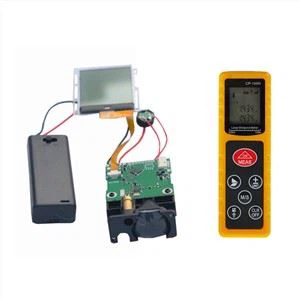
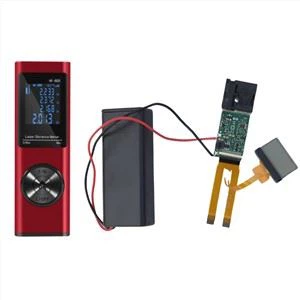
The laser is the core component of a rangefinder. It can emit a precise laser beam for measuring distance and usually includes a laser generator and a laser receiver.

2

Photodetector

It is used to receive the laser signal reflected from the measured object, convert it into an electrical signal, and output the distance data after processing.

3

Display and computer

Devices that display distance measurements and store data, usually including digital displays, computers, and data storage cards.

4

Batteries and circuit boards

Provides power and electronic components to control rangefinders.

How to Use Distance Meter


Rangefinders are divided into two categories, one is handheld rangefinder and the other is telescopic rangefinder. The two types of rangefinders have different usage methods and different uses.

The method of using the handheld rangefinder is: Holding the rangefinder, when I want to measure another target, I first emit infrared rays, aim at the measurement target, press the measurement button of the machine, and the data will be displayed within 1 second. Appears on the instrument screen.


The method of using the telescope rangefinder is: Hold the telescope and point one eye towards the eyepiece. There is a small cross circle inside the eyepiece. With this small circle as the middle point, aim at the target point we want to measure, and press press the measurement button and the data will be displayed in the eyepiece.


Instrument Operation And Use

Place the instrument. First place the theodolite on the measuring station. After centering and leveling, install the rangefinder host on the theodolite bracket, lock it with the connector fixing screws, insert the battery into the bottom of the host and fasten it. Place the reflective prism at the target point, center it, level it, and make the mirror face the host machine.


Observe the vertical angle, temperature and air pressure. Use the theodolite cross wire to aim at the middle of the target plate and measure the vertical angle α. Also, observe and record the readings on the temperature and barometer. Observe the vertical angle, air temperature and air pressure in order to correct the slant distance measured by the rangefinder for tilt, temperature and air pressure to obtain the correct horizontal distance.


Preparation For Ranging: Press the power switch key "pwr" to turn on the machine. The host will self-test and display the original set temperature, air pressure and prism constant values. After the self-test is passed, "good" will be displayed.


If you want to correct the original setting value, you can press the "tpc" key and then input the temperature, air pressure value or prism constant (usually input one by one through the "ent" key and the numeric keys). Generally speaking, as long as the same type of reflector is used, the prism constant remains unchanged, but the temperature and air pressure may be different for each observation and need to be reset.


Distance Measurement: Adjust the horizontal adjustment handwheel of the main unit's sighting axis (or the horizontal micro-motion screw of the theodolite) and the main unit's pitch micro-motion screw to make the rangefinder telescope aim at the center of the prism. When "good" is displayed, aiming can also be judged based on the sound of the buzzer. The stronger the signal, the louder the sound. Move the rangefinder up, down, left and right to make the buzzer sound louder, then aiming is completed and "*" appears. ".


After aiming, press the "msr" key, and the host will measure and display the slant distance corrected by temperature, air pressure and prism constant. During measurement, if the speed of light is blocked or the atmosphere jitters, etc., the measurement will be temporarily interrupted. At this time, the "*" disappears, and the automatic measurement will continue after the light intensity becomes normal. If the light beam is interrupted for 30 seconds, the light intensity must be restored before pressing " msr" key to retest.


The conversion from slope distance to horizontal distance is generally performed on site using a rangefinder. The method is: Press the "v/h" key and then enter the vertical angle value, and then press the "shv" key to display the horizontal distance. Press the "shv" key continuously to display the slope distance, horizontal distance and height difference in sequence.

 
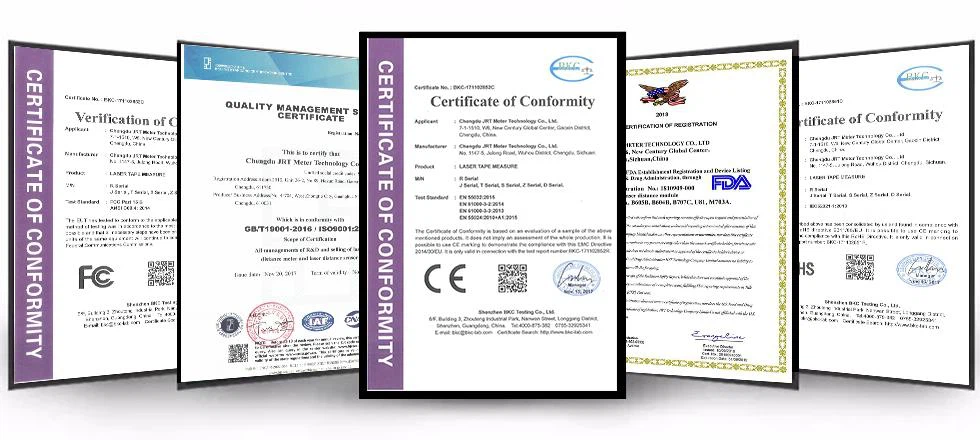
Certifications


productcate-1-1

 
Our Factory


We start as a technical services company, now we are the biggest laser distance sensor manufacture in china. In 2018, our u81, smallest phase-shift laser distance sensor is on market. In 2019, we started to produce lidar sensor. We are always r&d new and better laser sensors for all customers.

productcate-1-1

 
FAQ
 

Q: What is a distance meter used for?

A: Measure distances, area, and/or volume. Measure height or width of buildings¹ and other objects, by triangulation if needed.

Q: What is a meter used to measure distance?

A: The current definition was adopted in 1983 and modified slightly in 2002 to clarify that the metre is a measure of proper length. From 1983 until 2019, the metre was formally defined as the length of the path travelled by light in vacuum in 1299792458 of a second.

Q: How accurate is distance meter?

A: As far as accuracy, laser distance measuring tools work as well at short distances as long distances with some being to within 1/16 of an inch at 400 ft.

Q: Why is distance measured in meters?

A: The meter is the basic unit of distance in the international system of units (si), the world's standardized system of measurement. Since the 1960s, all countries have adopted or legally recognized the si. As a universal standard of measure, the meter helped ease the exchange of commerce and scientific data.

Q: Is distance always in meters?

A: Units are important in physics (and in all of science). In the lab, we will usually measure distance or displacement in units of meters (m). Distance or displacement could also be measured in centimeters (cm) or kilometers (km) or even miles (mi).

Q: How is distance measured?

A: The common method of determining distance is by direct measurement with a tape. The tape is called a "chain" and is usually 100 ft in length. The term "chain" comes from the form of the early tapes which were composed of 100 links, each one foot long.

Q: What method is used to measure distance?

A: There are four basic methods of determining distances: Radar, parallax, standard candles, and the hubble law. Each of these methods is most useful at certain distances, with radar being useful nearby, and the hubble law being useful at the most distant scales.

Q: What are the advantages of distance meter?

A: A laser distance meter is accurate and quick and requires only one person and one hand. It's easy to use and versatile. Laser distance meters have on-board processing enabling the device to triangulate and calculate – it knows pythagoras!

Q: How do you measure distance accurately?

A: Digital tape measures are accurate for both short distances and long distances up to 300 feet. They are also portable and easy to use. However, there are limitations as well. Laser tape measures should only be used indoors, and they only work if there is a solid endpoint for them to reflect a beam against.

Q: What is the smallest way to measure distance?

A: The planck length is 1.6metres divided by ten 35 times (1.6 x 10 ⁻³⁵), or 0.000000000000000000000000000000000016 metres, which, aside from being really very small indeed, is a measurement that is, as it turns out, as small as it is possible to go.

Q: Why all distances are not measured in meters?

A: When making measurements which involves very large numbers or very small numbers, using one standard unit of length becomes very difficult and impractical. Therefore, for measurements involving small numbers submultiples of standard units are used and for large numbers multiples of standard units are used.

Q: Is distance always in meters?

A: Units are important in physics (and in all of science). In the lab, we will usually measure distance or displacement in units of meters (m). Distance or displacement could also be measured in centimeters (cm) or kilometers (km) or even miles (mi).

Q: How do distance meters work?

A: They're based on how lasers reflect off of surfaces. To measure distance, the device sends out a pulse of laser light in the object's direction. The time it takes for the beam to get there and back determines the distance measurement.

Q: What are the uses of distance meter?

A: Measure distances, area, and/or volume. Measure height or width of buildings¹ and other objects, by triangulation if needed. Verify cad drawings for as-built and design drawings. Determine how square a room or object really is, or whether the sides are completely parallel.

Q: What is best used to measure distance?

A: Tape measures are portable tools that can clip to a belt and measure maximum distances ranging from 6 feet to 33 feet, depending on tape length. A long tape measures distances between 100 and 300 feet and unspools from a reel. Measuring tapes are good backups for situations in which other tools won't work.

Q: Why is accuracy important when measuring?

A: Why is it important to measure accuracy? When working in fields that use data, such as science, it's important to measure the accuracy of those calculations to ensure reliable results. Accurate measurements can help professionals make sure they're compiling complete and thorough data.

Q: What are the two ways to measure distance?

A: If you are trying to measure the distance between 2 points on a piece of paper, multiple methods work well. There are three main types of horizontal or linear distance measurement. Direct method. Optical method.

Q: Can a measurement be both precise and accurate?

A: Precision refers to how close measurements of the same item are to each other. Precision is independent of accuracy. That means it is possible to be very precise but not very accurate, and it is also possible to be accurate without being precise. The best quality scientific observations are both accurate and precise.

Q: Can distance be used to measure time?

A: Distance is directly proportional to time. However every body does not have constant speed relative to each other, so we cannot measure time with distance. But off course we can use time to measure distance if the speed of the body is constant.

Q: What is the best way to measure distance?

A: Laser distance measures are as accurate as tape measures and are faster to use. Many situations where you would use a tape measure you could employ a laser distance measure. If you're looking for a combination of convenience and accuracy, pick a laser distance measure.

As one of the most professional distance meter manufacturers and suppliers in China, we're featured by customized products with low price. If you're going to wholesale bulk cheap distance meter, welcome to get quotation from our factory. Also, OEM service is available.

(0/10)

clearall