


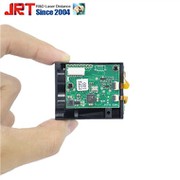
1000m Infrared Range Finder Sensor
Rangefinder sensor Model: PTYS-10X-1(k251022n25-4)
laser wave-length: 905nm ± 5nm
Measure capability: ≥ 1000m
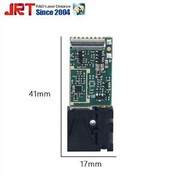
Dimensions: 25.5*30.5*20.9mm
Weight: about 14.5g
Interface: UART-TTL
Voltage: 3.3V
1000m Infrared Range Finder Sensor
The infrared range finder sensor is 905nm pulse ranging sensor and can measure up to 1000m, that's a cutting-edge tool designed to measure distances with remarkable precision and reliability. Utilizing infrared technology, these sensors have gained popularity across various industries, including construction, UAV, archery, anti-drone, thermal imager, night vision device and consumer electronics. With their ability to operate effectively in diverse environmental conditions, infrared range finders offer significant advantages over traditional measurement methods. This article delves into the principles behind these sensors, their key features, and applications, while also exploring their benefits compared to other range-finding technologies. As we look towards the future, we will also consider emerging trends and innovations that promise to enhance the capabilities of infrared range finder sensors.
If you have any other questions for the long sensors, please contact us: jane.l@jrt-measure.com.

Overview of 1000m Infrared Range Finder Sensors
Definition and Functionality
A 1000m infrared range finder sensor is a device that uses infrared light to measure the distance to an object up to 1000 meters away. By emitting a beam of infrared light and measuring the time it takes for the light to bounce back, these sensors determine how far away an object is. Think of it as a very clever game of "ping" where the sensor eagerly awaits the return of its light to calculate distances with precision.
Types of Infrared Range Finder Sensors
There are two main types of infrared range finder sensors: active and passive. Active sensors emit infrared light and listen for the reflections, while passive sensors detect the infrared radiation naturally emitted from an object. Active sensors are like the extroverts of the group-always sending out signals and ready to chat, while passive sensors are more introverted, quietly observing their surroundings. Both get the job done, but they have their unique quirks and advantages!
Products Technical Parameters
1. The main performance indicators are as follows:
a) Working wavelength: 905nm ± 5nm @ 25℃;
b) Ranging capability: ≥ 1000m (large target, reflectivity 0.3, relative humidity 60%, visibility ≥ 10Km);
c) Minimum ranging distance: ≤ 3m;
d) Accuracy: ≤ ±1m (≤ 300m), ≤ ±2m (> 300m);
e) Precision rate: ≥ 98%;
f) Ranging frequency: single shot, 1Hz;
g) Stray light: ≤ 10°.
2. Environmental Adaptability:
a) Operating Temperature: -20℃ to 60℃ (-30℃ test verified);
b) Storage Temperature: -35(±2)℃ to 75(±2)℃ (verified in the trial production batch);
c) Shock: The module is subjected to a half-sine wave pulse with a peak acceleration of 1000G along the center of the optical axis for 0.5ms each time, for a total of 20 times. The change in the optical axis of the module is ≤ 0.3 mil (tested with the complete machine);
d) Water and Dust Resistance: The module is fixed at the tail of the fixture and inflated with an air pressure of 35kpa. The leakage rate is ≤ ±0.4 sccm;
e) Environmental Protection: Complies with RoHS 2.0 requirements (reports provided for the trial production batch and the first batch of mass production, and subsequently provided at the frequency requested by the customer);
f) Safety Regulations: Complies with Class 1 in IEC:60825-1 (reports provided for the trial production batch and the first batch of mass production, and subsequently provided at the frequency requested by the customer);
g) Vibration Test (verified in the trial production batch): The module is subjected to vibration under specified random vibration conditions for 10 minutes in each of the three directions. The module remains secure and meets all specification requirements;
h) Drop Test (verified in the trial production batch): The lens, packaged as per the sample, is dropped freely from a height of 1.0 meter above a wooden floor, with each corner, edge, and face dropped 5 times. The lens remains secure and meets all specification requirements.
3. Physical Characters
Dimensions: 25.5mm × 30.5mm × 20.9mm (L × W × H)
Weight: ≤ 14.5g

4. Electrical interface requirements are as follows:
a) Power supply voltage: 3.3V;
b) Communication type: UART-TTL (3.3V);
c) Startup peak current: ≤ 680mA @ 560us;
d) Standby power consumption: ≤ 0.6W;
e) Average power consumption: ≤ 0.8W;
f) Peak power consumption for distance measurement: ≤ 1.35W;
g) Leakage current: < 100uA;
h) Power-on distance measurement response time: ≤ 100ms;
5. Data
a) Single-byte transmission format: It includes 1 start bit, 8 data bits, no parity, 1 stop bit, and the 8-bit data is transmitted with the lower bits first and the higher bits later.
b) Baud rate: 115200 bps.
c) Communication interface: UART-TTL (3.3V).

Operating Principles of Infrared Range Finders
How Infrared Light Works
Infrared light is a type of electromagnetic radiation that sits just below visible light on the spectrum. It's invisible to the naked eye, which is somewhat of a superhero quality if you think about it! When used in a range finder, infrared light is sent toward an object. If the object is reflective enough (like a shiny car or your neighbor's suspiciously placed garden gnome), the light bounces back, allowing the sensor to calculate the distance based on the speed of light. Spoiler alert: it's pretty fast!
Measurement Techniques
Infrared range finders typically utilize time-of-flight measurement, which calculates the time taken for the emitted light to return. By multiplying this time by the speed of light and dividing by two (because it's a round trip), we get the distance. Some advanced models may also employ triangulation for greater accuracy, but that's a whole other level of math that requires a calculator and possibly a strong cup of coffee.
Mechanical dimensions

Pin Definition

Chengdu JRT Main Ranging Sensors: Industrial Laser Distance Sensor, Laser Distance Meter Sensor, Long Rangefinder Module, TOF High Frequency LiDAR Sensor.
For more info, please feel free to contact us:
Email: jane.l@jrt-measure.com.
WeChat: +8617708191805
Hot Tags: 1000m infrared range finder sensor, China, manufacturers, suppliers, factory, wholesale, customized, cheap, quotation, OEM, low price


Send Inquiry
