Call Us: +86-28-68731157Email: info@jrt-measure.com
enLanguage

Industrial Sensor

What is Industrial Sensor?


Industrial sensors are sensors that equipment and systems use to measure physical quantities. They also measure and feel the existing conditions. Finally, the result is recorded and displayed. There are different types of sensors that are used in control and automatic and intelligent equipment from smartphones to factories and wide industries. Of course, the sensors of small devices are different from the sensors that are used in the industry.

Advantages of Industrial Sensor

They Improve Safety

Safety is an important consideration in any industrial process. Sensors provide an important layer of safety by allowing processes to be monitored in real time. This allows workers to quickly identify and address any potential safety risks before they can lead to an accident.

They Can Be Used To Automate Processes

In industrial processes, sensors can be used to automate a variety of tasks. Automation helps businesses increase their efficiency and reduce costs associated with manual labor. Sensors are used to monitor the environment and detect when certain conditions are met.

They Improve Product Quality

In an industrial process, sensors can help improve product quality by providing real-time feedback on the status of the process. This helps to ensure that all components are operating as expected and are producing a consistent product.

They Can Be Used To Reduce Costs

Sensors are becoming an increasingly important part of industrial processes due to the cost savings they can provide. Sensors can be used to monitor and control different aspects of a process, including flow rate, temperature, pressure, and more.

First 123 Last 1/3

why choose us


High quality

Our products are manufactured or executed to very high standards, using the finest materials and manufacturing processes.


Rich experience

Dedicated to strict quality control and attentive customer service, our experienced staff is always available to discuss your requirements and ensure complete customer satisfaction.


Quality control

We have professional personnel to monitor the production process, inspect the products and ensure that the final product meets the required quality level standards, guidelines and specifications.


24h online service

We try and respond to all concerns within 24 hours and our teams are always at your disposal in case of any emergencies.

 
Types of Industrial Sensor

Temperature Sensors
In industrial production, temperature is the most frequently measured physical parameter, and various sensors can be used for measurement. A temperature sensor is a device that collects information about temperature from the environment and converts it into specific values. Among them, digital temperature sensors and temperature and humidity sensors are most commonly used in industrial automation.


Pressure Sensors
The pressure sensor is a device that can sense the pressure signal and convert the pressure signal into a usable output electrical signal according to a certain rule. The pressure sensor is usually composed of a pressure sensitive element and a signal processing unit.


Level Sensors
Level sensors are a device used to monitor, maintain and measure the level of liquids (sometimes solids). Once the liquid level is detected, the sensor converts the sensed data into electrical signals. The liquid level sensor is a device used to determine the liquid level flowing in an open system or a closed system.


Infrared Sensors
An infrared sensor is a device that uses infrared to process data. Infrared is also called infrared light. It has properties such as reflection, refraction, scattering, interference, and absorption. Any substance, as long as it has a certain temperature (above absolute zero), can radiate infrared rays.

Proximity sensors

The proximity sensor is a device with the ability to perceive the proximity of an object. It uses the sensitive character of the displacement sensor to recognize the proximity of the object and outputs the corresponding switch signal. The proximity sensor can perform non-contact sensing detection, so it will not wear and damage the detection object, and there is no spark or noise.

Smoke sensors

The smoke sensor can detect a large amount of smoke generated during a fire and send out an alarm signal in time. The detector adopts mcu control, which can intelligently judge the smoke generated during the fire and alarm. The smoke sensor is an indispensable sensor in a flammable and explosive industrial production environment.

Optical sensors

The optical sensor is based on the optical principle for measurement. It has many advantages, such as non-contact and non-destructive measurement, almost no interference, high-speed transmission, and remote control. It mainly includes optical sensors and instruments such as general optical measuring instruments, laser interferometers, gratings, encoders, and fiber optics.

Importance of Sensors Used in Industrial Automation

Monitoring And Control
Sensors provide data that is used to monitor and control various aspects of the industrial process, such as temperature, pressure, flow, and level. This data is used to make adjustments and optimize the process for maximum efficiency and quality.


Safety And Security
Sensors can be used to monitor safety and security in industrial environments. For example, proximity sensors can be used to detect the presence of people or objects, and sound sensors can be used to monitor noise levels.


Predictive Maintenance
Sensors can be used to gather data that can be used to predict when equipment is likely to fail. This allows maintenance to be scheduled before a failure occurs, minimizing downtime and reducing the risk of equipment damage.


Energy Efficiency
Sensors can be used to monitor and control energy usage in industrial processes. For example, temperature sensors can be used to control heating and cooling systems, and flow sensors can be used to control the flow of liquids and gases.


Quality Control

Sensors can be used to monitor and control the quality of products in industrial processes. For example, light sensors can be used to detect defects in products, and position sensors can be used to ensure that products are assembled correctly.


Sensors are critical for industrial automation, providing real-time data that is used to make decisions and control various aspects of the industrial process, ensuring safety and security, predicting maintenance, energy efficiency, and quality control.

How to Choose Industrial Sensor
Tof技术高精度激光测距传感器
精确的飞行时间传感器激光测距模块
激光位置传感器
高频 TOF 传感器

Determine The Type Of Sensor According To The Measurement Object And Measurement Environment
To carry out a specific measurement work, we must first consider which principle of sensor is used, which can only be determined after analyzing many factors. Because, even when measuring the same physical quantity, there are sensors with multiple principles to choose from. Which principle of sensor is more suitable? You need to consider the following specific issues based on the characteristics of the measured and the use conditions of the sensor: The size of the measuring range; the requirements for the sensor volume at the measured location; whether the measurement method is contact or non-contact; the signal extraction method, wired or non-contact measurement; the source of the sensor, domestic or imported, whether the price is affordable, or self-developed.


Sensitivity Selection
Generally, within the linear range of the sensor, it is desired that the sensor's sensitivity be as high as possible. Because only when the sensitivity is high, the value of the output signal corresponding to the measured change will be relatively large, which is beneficial to signal processing. However, it should be noted that the sensor has high sensitivity, and external noise unrelated to the measurement is easily mixed in, and will be amplified by the amplification system, affecting the measurement accuracy. Therefore, the sensor itself is required to have a high signal-to-noise ratio to minimize interference signals introduced from the outside world.


Frequency Response Characteristics
The frequency response characteristics of the sensor determine the frequency range to be measured and must remain undistorted within the allowable frequency range. In fact, there is always a certain delay in the sensor's response, and it is hoped that the delay time will be as short as possible. The higher the frequency response of the sensor, the wider the measurable signal frequency range.


Linear Range
The linear range of a sensor is the range over which the output is proportional to the input. Theoretically, within this range, the sensitivity remains constant. The wider the linear range of the sensor, the larger its measuring range and a certain measurement accuracy can be guaranteed. When selecting a sensor, after the sensor type is determined, you must first check whether its measuring range meets the requirements.
But in fact, no sensor can guarantee absolute linearity, and its linearity is also relative. When the required measurement accuracy is relatively low, a sensor with a small nonlinear error can be approximately regarded as linear within a certain range, which will bring great convenience to the measurement.


Stability
The ability of a sensor to maintain its performance over a period of time is called stability. In addition to the structure of the sensor itself, the factors that affect the long-term stability of the sensor are mainly the environment in which the sensor is used. Therefore, in order for the sensor to have good stability, the sensor must have strong environmental adaptability.
Before selecting a sensor, you should investigate its usage environment and select an appropriate sensor based on the specific usage environment, or take appropriate measures to reduce the impact on the environment.


Accuracy
Accuracy is an important performance indicator of the sensor, and it is an important link related to the measurement accuracy of the entire measurement system. The higher the accuracy of the sensor, the more expensive it is. Therefore, the accuracy of the sensor only needs to meet the accuracy requirements of the entire measurement system, and there is no need to select it too high. In this way, you can choose the cheaper and simpler sensor atlas air compressor accessories among many sensors that meet the same measurement purpose.

How to Maintain Industrial Sensor


Use Appropriate Protective Equipment
Installing appropriate protection devices can effectively protect the sensor from harmful factors such as mechanical shock, vibration, moisture and high temperature, thereby ensuring its normal operation.


Regular Calibration
After using the sensor for a period of time, the sensor may have certain errors due to the influence of environment, temperature, humidity and other factors. Regular calibration can avoid the accumulation of errors.


Avoid Overuse
Although the sensor can work for a long time, excessive use will cause fatigue of the sensor, so frequent use should be avoided.


Avoid Strong Magnetic Field Interference
Strong magnetic fields may affect the accuracy of the sensor, and the sensor should be avoided from working near strong magnetic fields as much as possible.


Use The Appropriate Operating Temperature Range
Sensors usually can only work within a certain operating temperature range. If they exceed the range, they will not work properly or be damaged. Therefore, the appropriate operating temperature range should be selected based on the technical specifications of the sensor and the actual situation.

Precautions of Industrial Sensor
 

To understand the characteristics of the sensor output signal. Since there are many types of sensors and their output forms are various, when using or selecting a sensor, you must first understand the characteristics of the sensor output signal.


The output signal of the sensor is generally relatively weak, so in most cases an amplification circuit should be installed. The amplification circuit is mainly used to amplify the dc signal or ac signal output by the sensor to provide a high-precision analog input signal for the detection system. It plays a key role in the accuracy of the detection system.


The output of the sensor changes as the input physical quantity changes, but the relationship between them is not necessarily a linear proportional relationship. When the relationship between input and output is nonlinear, a linearization processing circuit should be added to the detection circuit.


The output of the sensor is generally affected by temperature, and there is a temperature coefficient. Temperature compensation should be carried out when using it.


The stability of the sensor is often related to the working environment. Necessary measures should be taken according to the characteristics of the sensor to improve the working environment, such as shock absorption, light avoidance, constant temperature, constant humidity, voltage stabilization and constant current, etc.


The sensor interface circuit is a very important connection link between the sensor and the detection system, and its performance directly affects the measurement accuracy and sensitivity of the entire system. Therefore, the interface circuit should be selected reasonably according to the characteristics and purpose of the sensor output signal.


The output impedance of the sensor is relatively high. To prevent signal attenuation, an appropriate impedance matcher should be used.


In non-electricity detection and control systems composed of sensors, interfering noise signals are often mixed in. These noise signals will increase the error of the measurement results and cause chaos in the control program. Therefore, in the process of sensing signal processing, noise suppression cannot be ignored. Generally, measures such as shielding, grounding, isolation, and filtering can be adopted.


Each type of sensor has its special usage points. Special attention should be paid when using it, otherwise it will cause large errors in measurement.

 
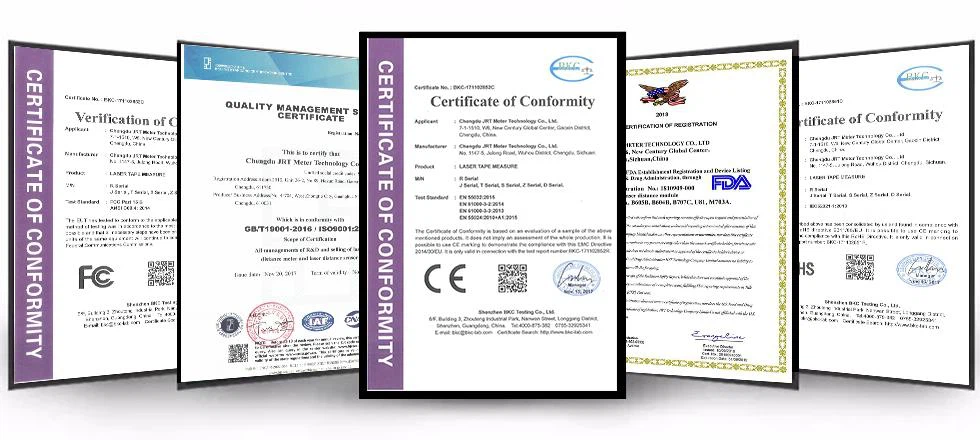
Certifications


productcate-1-1

 
Our Factory


We start as a technical services company, now we are the biggest laser distance sensor manufacture in china. In 2018, our u81, smallest phase-shift laser distance sensor is on market. In 2019, we started to produce lidar sensor. We are always r&d new and better laser sensors for all customers.

productcate-1-1

 
FAQ
 

Q: What are the application of sensors in industry?

A: Sensors used in the manufacturing industry monitor the performance of various processes and aspects of machine operation, collecting data to determine normal baseline levels of operation while also detecting even the most minuscule fluctuations in that performance.

Q: What is a factory sensor?

A: Manufacturing sensors are used in data acquisition to measure physical conditions on a machine. They consist of a device that receives or measures inputs and generates an output in data. This data can be used to trigger a machine response, or it can be used to collect data for analysis and storage.

Q: Why are sensors important in industrial automation?

A: Sensors play a crucial role by detecting and measuring a variety of parameters such as temperature, pressure, humidity, flow rate, motion, and position. They convert physical signals into electric signals and provide information in real-time to the control system, thereby making production intelligent and automated.

Q: What are the benefits of using sensors in industrial applications?

A: The key advantages of sensors include improved sensitivity during data capture, almost lossless transmission, and continuous, real-time analysis. Real-time feedback, and data analytics services ensure that processes are active, and are executed optimally.

Q: What is the purpose of sensor?

A: A sensor is a device that detects the change in the environment and responds to some output on the other system. A sensor converts a physical phenomenon into a measurable analog voltage (or sometimes a digital signal) converted into a human-readable display or transmitted for reading or further processing.

Q: What are smart sensors in manufacturing?

A: A smart sensor collects data on the physical environment and transmits it to centralised cloud computing platforms. This collected data is then processed and analysed. They allow seamless connectivity inside any automated manufacturing plant.

Q: What is the working principle of a sensor?

A: Sensors work by detecting physical changes in the device's environment and output them as analogue voltages or digital signals. This is then sent to a human-readable display where it can be monitored or transmitted, or relayed to other electronic devices for further processing.

Q: What is the basic principle of sensors?

A: A sensor is defined as a device that receives a signal or stimulus and responds to it by generating an electrical signal. The output signals correspond to some forms of electrical signal, such as current or voltage, which can be easily measured.

Q: How sensors are classified?

A: Sensors are classified on the basis of the output signal, physical parameters measured by them, and various other points. Sensors on the basis of the output signal are classified into analog and digital output sensors.

Q: How are sensors linked with industrial communication?

A: Sensors play a crucial role in automating industrial processes. They detect and measure parameters like temperature, pressure, humidity, flow rate, motion, and position. This data is converted into electric signals and provided in real-time to the control system, making production intelligent and automated.

Q: What is the role of sensors in technology?

A: Data monitored and collected by sensors is sent for control and analysis, and any anomaly in a particular property is reported by emitting an electrical signal by that sensor. This way, sensors enhance process efficiency and product quality, while ensuring that processes comply with best practices.

Q: What is the role of sensor in engineering?

A: Sensors are electronic devices that monitor physical attributes from machinery, appliances, devices, and other systems, such as temperature, strain, distance, speed, torque, acceleration, etc. The sensor uses multiple input proportionate technologies to generate an electrical signal/optical signal.

Q: What is the primary purpose of sensors in automation?

A: Sensors play a crucial role in automation by providing real-time data for systems to operate and make decisions autonomously. In the realm of automation, sensors are the eyes and ears of the system. They gather information from the environment, which is then processed and used to control various operations.

Q: What is the role of sensors and actuators?

A: A sensor monitors conditions and signals when changes occur. An actuator receives a signal and performs an action, often in the form of movement in a mechanical machine.

Q: Is sensor a transducer?

A: Not all transducers are sensors but most sensors are transducers. For example a thermistor is a type of sensor; it will respond to the change in temperature but does not convert the energy into a different format to what it was originally sensed in.

Q: What is an example of a sensor and actuator?

A: In the light example, as the sensor is reading the brightness of the light by converting it into an electrical signal, an actuator takes action according to the desired setting. So here, it will decrease or increase the light brightness according to the set parameters.

Q: What is a sensor in business?

A: In industries like manufacturing and distribution, sensors are part of the internet of things (iot), allowing devices to collect data from the physical environment – input such as light, heat, motion, moisture or pressure.

Q: Is sensor an iot?

A: Sensors play an important role in creating solutions using iot. Sensors are devices that detect external information, replacing it with a signal that humans and machines can distinguish.

Q: What are the two main components of a sensor?

A: (1) The sensing section contains the sensor itself which is based on a particular technology. The variety of technologies means you can select a sensor technology which fits your application. (2) The processing circuitry converts the physical variable into an electrical variable.

Q: How many types of sensors are there?

A: There are two types of sensors: Direct sensor: A sensor that can convert a non-electrical stimulus into an electrical signal with intermediate stages. Eg: Thermocouple (temperature to voltage). Indirect sensor: A sensor that multiple conversion steps to transform the measured signal into an electrical signal.

As one of the most professional industrial sensor manufacturers and suppliers in China, we're featured by customized products with low price. If you're going to wholesale bulk cheap industrial sensor, welcome to get quotation from our factory. Also, OEM service is available.

(0/10)

clearall