Laser ranging technology helps you measure distances conveniently
Dec 12, 2019
Common measurement methods on the market today include ultrasonic ranging and millimeter wave ranging. With the popularization of laser technology, laser ranging sensors have become more and more common in people's lives.
1. Ultrasonic ranging
Ultrasonic waves have strong directivity, slow energy consumption, and long distances in the medium. Therefore, ultrasonic waves are often used for distance measurement, such as rangefinders and level measuring instruments, etc. can be achieved by ultrasonic waves. The use of ultrasonic testing is often relatively fast, convenient, simple to calculate, easy to achieve real-time control, and can meet industrial practical requirements in terms of measurement accuracy. Therefore, it has also been widely used in the development of mobile robots.
Common ranging applications for ultrasonic sensors
-Industrial quality monitoring, diameter and size inspection
-Liquid level detection
-Robot obstacle avoidance
-Car (parking system) obstacle avoidance
-Smart Home
Advantages and disadvantages of ultrasonic sensor ranging
Advantage:
Without any mechanical transmission parts, it is not afraid of electromagnetic interference, and is not afraid of strong corrosive liquids such as acid and alkali, and has strong stability.
The frequency is high, the wavelength is short, and the diffraction phenomenon is small. In particular, the directivity is good, and it can be directional and propagate.
The ability to penetrate liquids and solids is great, especially opaque solids in the sun.
Disadvantage:
The anti-interference ability is weak. Any acoustic noise may interfere with the normal output of the sensor. Putting together two ultrasonic sensors with the same frequency will cause acoustic crosstalk. At the same time, it will be disturbed by smoke, dust and raindrops.
The error rate is high, and the transmission angle is large. When there are many obstacles, there are more reflected sound waves and more interference.
The measurement range is limited. The measurement range is usually within 100 meters, which is not suitable for ultra-long-range detection.
The measurement accuracy is low. The measurement accuracy of ultrasonic ranging sensors is usually centimeter level.
Can only detect flat media. For example, after the sound wave is received by the 58-degree inclined plane, the sound wave cannot return to the receiver normally.
It is not conducive to measuring objects moving at high speed. Because ultrasonic waves use sound velocity to propagate, compared with optical sensors, the response time is longer.
2.Millimeter wave sensor
Millimeter-wave radar sensors use millimeterwave. Generally millimeter wave refers to the frequency range of 30 to 300 GHz (wavelength is 1 to 10 mm). Among them, 24GHz radar sensor and 77Ghz radar sensor are mainly used for automobile collision avoidance. Millimeter wave has a wavelength between centimeter wave and light wave, so millimeter wave has the advantages of both microwave guidance and photoelectric guidance. Compared with centimeter wave radar, millimeter wave radar has the characteristics of small size, easy integration and high spatial resolution. Compared with optical sensors such as cameras, infrared, and lasers, millimeter-wave radars have the ability to penetrate fog, smoke, and dust, and have strong anti-interference capabilities.
Common ranging applications for millimeter wave sensors
-Car assisted driving
-Intelligent Transportation (Traffic Flow Identification and Management)
-Industrial Security
-Drone fixed height
-Smart Home
Advantages and disadvantages of millimeter wave sensor ranging
Advantage:
Long detection range, usually 100 meters away
Strong anti-interference ability, working around the clock, strong ability to penetrate fog, smoke and dust
Advantages for multi-target detection
Disadvantage:
Low detection accuracy, good chirp is not easy to obtain, affecting range resolution
Vulnerable to electromagnetic interference and false positives
Poor ranging for small or tiny objects
In the air defense environment, distance blur and speed blur are inevitable.
3. Laser ranging sensor
Laser ranging sensor: First, the laser diode is aimed at the target to emit laser pulses. After being reflected by the target, the laser light is scattered in all directions. Part of the scattered light is returned to the sensor receiver, and after being received by the optical system, it is imaged onto the avalanche photodiode. An avalanche photodiode is an optical sensor with an internal amplification function, so it can detect extremely weak light signals. Record and process the elapsed time from the time when the light pulse is sent to when it is returned to be received, and the target distance can be determined.
Product Features:
Wide measurement range and fast response speed;
Long distance measurement without reflector
High measurement accuracy and large range;
905 nm safety laser is not harmful to human eyes;
Small size and easy installation and commissioning;
On-line continuous measurement to achieve unattended continuous monitoring
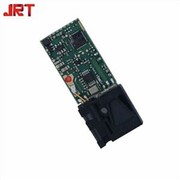
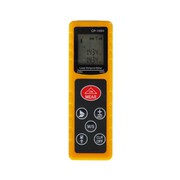
JRT laser ranging sensor has a variety of styles for you to choose, 0.03-10m / 20m / 40m / 60m / 100m / 150m, measurement accuracy is usually 1mm, the response speed is fast, welcome your inquiry.